
Home Gym Equipment: What You Need to Build a Complete Workout Space
, by Mathew Tyack , 8 min reading time
, by Mathew Tyack , 8 min reading time
Creating a home workout area starts with choosing home gym equipment that matches your fitness goals, available space, budget, and exercise routine. A well-planned setup can support strength training, cardio, mobility, and general fitness without requiring a large dedicated room. For a home gym in Australia, consider the size of the space, flooring, ventilation, storage, and how equipment will be used before making purchases.
Your fitness goals should guide your equipment choices. If strength training is the main focus, weights and resistance equipment may form the core of your setup. If you prefer cardiovascular workouts, equipment such as an exercise bike or treadmill may be suitable. Mobility and flexibility routines may only require a mat and a few compact accessories. Choosing equipment based on your actual routine can help prevent unnecessary items from taking up valuable space.
A complete workout space does not need to contain every type of gym equipment. A small selection of practical items can support a range of exercises when used correctly.
Adjustable dumbbells allow different resistance levels to be used without requiring multiple pairs of weights. They can support exercises such as presses, rows, curls, lunges, and squats. Store them securely when they are not being used and check the adjustment mechanism regularly.
Kettlebells can be used for movements such as swings, squats, presses, rows, and carries. Different weights can be selected according to the exercise and training experience. They should be used on a stable surface with enough space around the user.
Resistance bands are compact and can support strength exercises, warm-ups, mobility work, and stretching routines. They are available in different resistance levels and can be stored easily. Check bands for cracks, tears, or other signs of wear before use.
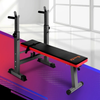
A workout bench can provide support for exercises such as dumbbell presses, rows, seated movements, and step-ups. An adjustable bench can provide different positions for different exercises. It should be placed on a stable surface with enough clearance around it.
A barbell and weight plates can support exercises such as squats, deadlifts, rows, and presses. This equipment requires more floor space and suitable storage. Weight plates should be secured and stored safely when they are not being used.
Cardio equipment can be included when walking, running, cycling, or rowing is part of your regular workout routine. The equipment should fit comfortably within the available space and allow safe access.
Treadmills provide an indoor option for walking and running, while exercise bikes support stationary cycling. Both require enough surrounding space for safe use and access. Powered equipment should also have appropriate electrical access and be maintained according to the manufacturer's instructions.
Rowing machines provide a full-body movement that requires sufficient floor length. The handle and seat need clear space to move during exercise. The machine should be positioned so that other equipment and walkways are not obstructed.
Functional training equipment can support bodyweight, resistance, balance, and coordination exercises. Medicine balls, suspension trainers, step platforms, and exercise mats can be included according to the workout routine.
Medicine balls can be used for controlled core, rotational, and strength movements. Suspension trainers use adjustable straps for bodyweight exercises and require a secure anchor point. Step platforms can support step-ups and other lower-body movements but should remain stable during use.
The amount of space required depends on the equipment and exercises planned. Remember to account for movement around equipment, not just the footprint of each item. A small room may work with compact equipment such as dumbbells, resistance bands, a mat, and a foldable bench. A garage or spare room can accommodate larger items when there is sufficient clearance.
If you are unsure how to make the most of your available space, Xanadu Living’s We Design Your Space service can help. Simply send photos of your room, and the team can use AI to generate home gym equipment images within your space, helping you visualise how different furniture pieces and layouts could look before making your purchase.
Suitable flooring can provide a stable exercise surface and help protect the underlying floor from equipment. Exercise mats and gym flooring can be selected according to the activities being performed and the type of equipment being used.
Storage is also important for maintaining a clear workout area. Dumbbells, kettlebells, resistance bands, weight plates, and accessories should have designated storage locations. Shelves, racks, containers, and wall-mounted storage can help keep equipment organised.
Good lighting allows you to see the equipment and surrounding floor clearly during exercise. The workout area should also have suitable ventilation to maintain airflow. Depending on the room, windows, fans, or an appropriate ventilation system may be used.
Safety should be considered when installing and using home workout equipment. Equipment should be assembled according to its instructions and inspected regularly for damage or loose components. Keep walkways clear and allow sufficient space around machines, benches, and racks.
Key safety practices include:
Check cables, bands, bolts, and fasteners regularly.
Keep heavy equipment securely stored.
Use equipment only for its intended purpose.
Maintain clear space around the workout area.
Remove damaged equipment from use until it has been repaired.
A home gym can be developed gradually instead of purchasing all equipment at once. Start with the items needed for your regular exercises and add equipment when your workout routine requires it. Adjustable dumbbells, resistance bands, a mat, and a bench can support several types of exercises without requiring extensive storage space.
Buying equipment before measuring the available space can create layout problems. It is also easy to purchase items that do not match your actual workout routine. Before buying gym equipment for home, consider the exercises you perform, equipment dimensions, storage requirements, floor space, and maintenance needs. Poor organisation can also create trip hazards, so equipment should be returned to its designated location after use.
Equipment should support your workout routine rather than determine it. A balanced programme can include strength exercises, cardiovascular activity, mobility work, and rest periods according to your fitness goals and experience. Beginners can focus on basic movements and controlled resistance, while more experienced users may require additional equipment for their training programme.
Regular maintenance can help identify equipment problems before they affect use. Inspect weights, benches, resistance bands, cables, racks, and other equipment for visible damage or wear. Cardio machines may require specific cleaning or maintenance procedures. Always follow the care and maintenance instructions provided for each piece of equipment.
Building a home workout space starts with understanding your fitness goals, available space, and exercise routine. Home gym equipment can include simple items such as resistance bands and dumbbells as well as larger equipment such as benches, racks, and cardio machines. Flooring, storage, ventilation, lighting, and safety should also be considered when planning the space.
Choosing equipment according to actual training needs can help create an organised workout area that supports regular exercise. Ready to upgrade your home gym? Contact Xanadu Living today to find the right equipment for your fitness goals and workout space.