
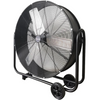
How to Choose a Floor Fan for Large vs Small Rooms
, by Mathew Tyack , 6 min reading time
, by Mathew Tyack , 6 min reading time
Choosing the best fan for a large room or small room starts with understanding how airflow, room size, and fan design work together. Floor fans and bladeless fans are popular choices because they provide effective home ventilation while remaining flexible and easy to place. However, the right fan for a compact bedroom may not suit a large living area. Matching fan performance to room size ensures better comfort, energy efficiency, and consistent airflow.
Buyers often focus on appearance or price first, but performance factors such as airflow strength, coverage area, and placement matter more. By understanding room size airflow requirements and fan features, it becomes easier to select a fan that delivers reliable cooling without overuse.
Room size directly affects how much air circulation is required for comfort.
Small rooms require controlled airflow to maintain comfort, while large rooms need stronger circulation to move air evenly. A fan that is too powerful for a small room can feel overwhelming, while a fan with low output may not effectively cool a large space. Choosing based on room size helps create balanced airflow.
Proper airflow improves air movement and comfort throughout the room. Floor fans and bladeless fans support home ventilation by circulating air rather than cooling it directly. This circulation helps maintain a consistent temperature feel.
CFM is one of the most important factors when comparing fans.
CFM stands for cubic feet per minute and measures how much air a fan moves. Higher CFM ratings indicate stronger airflow. For large room cooling, higher CFM values help distribute air across wider areas.
Small rooms benefit from moderate CFM levels that maintain steady airflow without excess force. Large rooms require higher CFM ratings to ensure air reaches all areas evenly. Choosing the correct range improves comfort and efficiency.
Small spaces need focused and controlled air circulation.
Compact fan selection works best for bedrooms, offices, and small living spaces. Floor fans with adjustable speed settings allow users to control airflow intensity. Bladeless fans also work well in small rooms due to their smooth and consistent air output.
Placing the fan near walls or corners helps distribute air evenly without direct blasts. Proper placement ensures balanced airflow while keeping the room comfortable.
Large rooms require wider airflow coverage and stronger circulation.
The best fan for large room cooling provides strong airflow with wide oscillation. Floor fans with high airflow capacity help move air across open spaces effectively. This improves comfort in living rooms and shared areas.
Bladeless fans work well in large rooms by providing continuous airflow without sharp air bursts. Their design supports even air distribution, which enhances overall comfort and home ventilation.
Both fan types offer unique benefits depending on room size and preferences.
Floor fans deliver powerful airflow and are effective for large room cooling. They are easy to reposition and often provide higher airflow output. This makes them suitable for wide spaces.
Bladeless fans offer consistent airflow and modern design. They are quieter and distribute air evenly, making them suitable for both small and medium rooms. Their smooth airflow supports comfortable ventilation.
Noise levels affect long-term comfort.
In small rooms, quieter fans improve sleep and focus. Bladeless fans typically operate at lower noise levels, making them suitable for bedrooms and workspaces.
In larger rooms, moderate noise levels are less noticeable. Floor fans with adjustable speed settings allow airflow control without excessive sound.
Efficiency supports long-term value and comfort.
Small rooms require less airflow, which reduces energy use. Choosing the right fan size prevents unnecessary power consumption. Efficient fans support cost-effective cooling.
Fans with multiple speed and oscillation settings allow better airflow control. This improves comfort across different room sizes and daily needs.
Correct placement improves overall performance.
Placing fans at an angle helps circulate air without direct exposure. This improves comfort while maintaining steady airflow.
In large rooms, placing fans near open areas improves air movement. Proper positioning ensures airflow reaches distant corners.
Fan design influences how well it fits into a space.
Slim and compact designs blend well into small spaces. Bladeless fans often suit minimal interiors due to their modern appearance.
Larger floor fans can complement open spaces. Their presence supports both function and visual balance.
Choosing the right fan improves comfort and usability.
Airflow strength and coverage should guide the decision. A well-matched fan performs better and lasts longer.
Selecting the correct fan for room size improves daily comfort. Balanced airflow supports better living conditions.
Choosing the right fan depends on room size, airflow needs, and usage preferences. The best fan for large room cooling offers strong airflow and wide coverage, while small rooms benefit from compact fan selection and controlled circulation.
By understanding CFM rating, room size airflow, and home ventilation needs, buyers can select floor fans or bladeless fans that deliver consistent comfort and efficiency. Get in touch with Xanadu Living for personalized support and inquiries.